Key points
- Food on the rim of a jar can stop the lid from sealing, which is why the funnel and the wipe matter.
- The headspace your jar needs comes from a tested recipe, not from a rule of thumb.
- Keep jars warm until you fill them, so hot food never goes into cold glass.
- The wide spout belongs in a wide mouth jar, the small one in a regular mouth jar or a bottle.
Why the funnel and the rim matter
Every canning recipe ends the same way: lid on, band on, into the canner. What happens in the canner depends on what happened at the counter. Nebraska Extension puts it plainly in its guide to filling jars: an uncleaned jar rim may cause the seal to fail. A smear of jam under the flat lid keeps it from sitting tight on the glass, and you only find out a day later, when the lid springs back under your thumb.
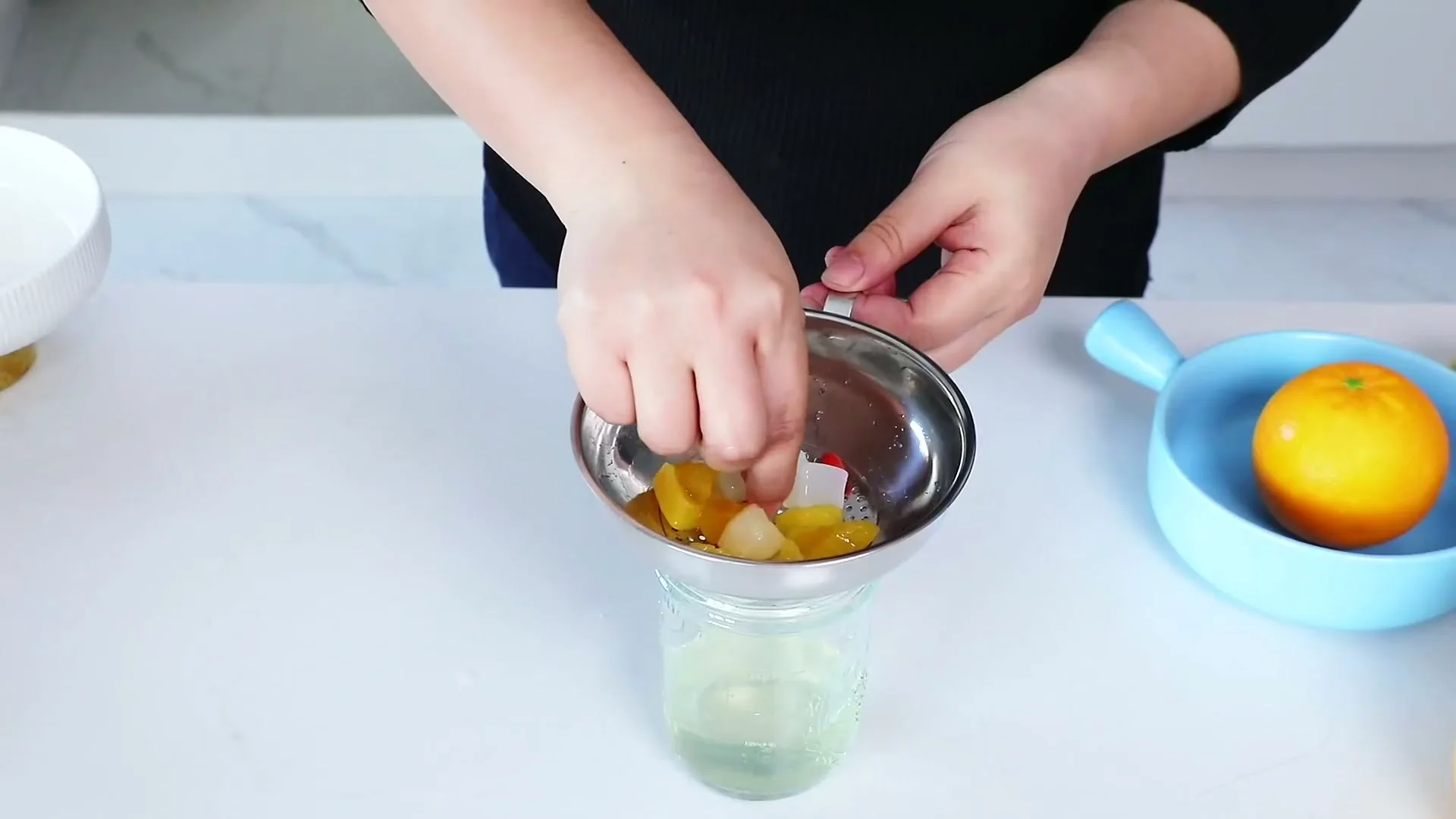
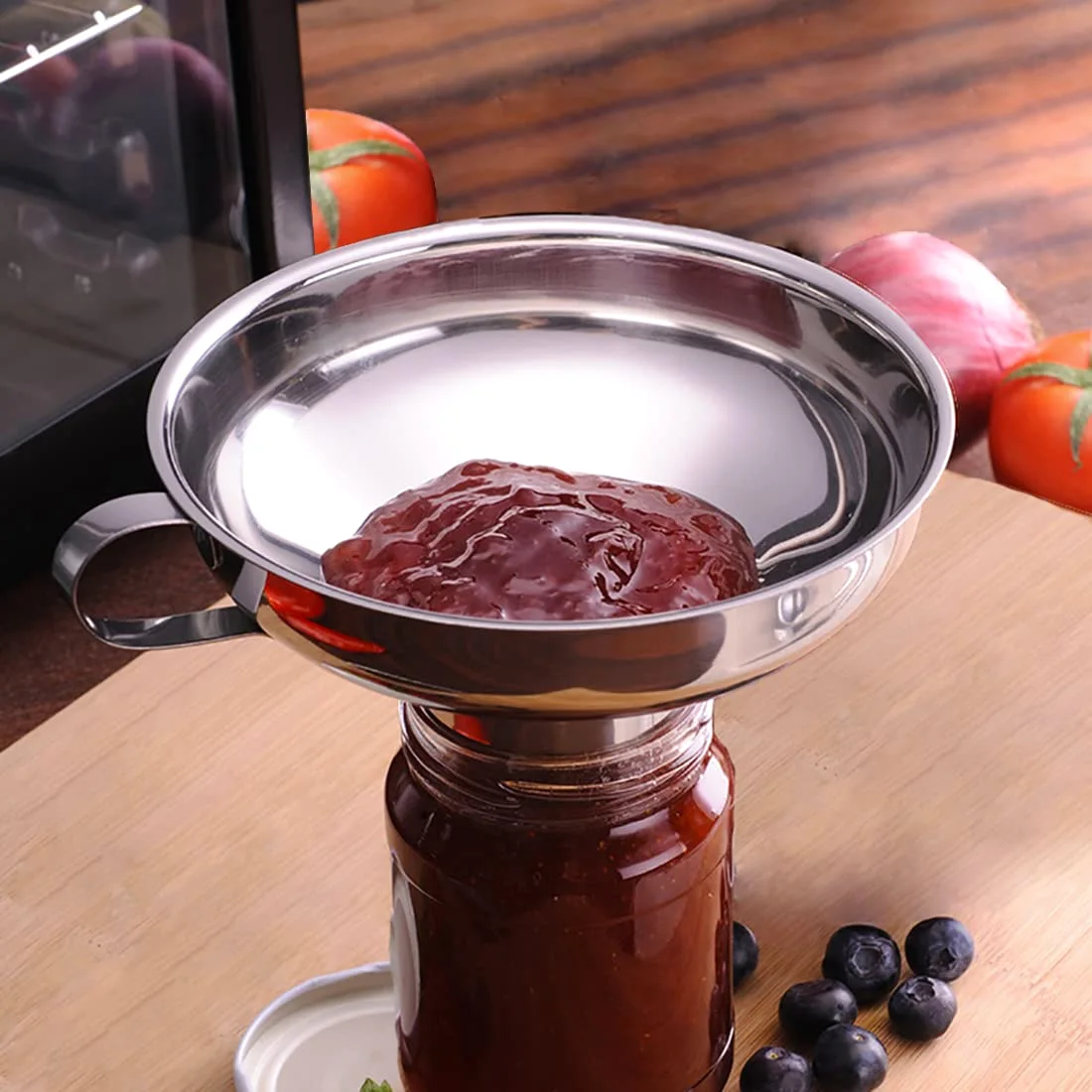
A funnel keeps that from happening in the first place. You rest it in the mouth of the jar, ladle the food into the bowl, and the spout carries it past the threads and the rim into the jar. The rim stays dry, the threads stay clean, and the counter stays clear of drips. When you lift the funnel, the only thing left to do is a quick wipe for luck.
Our stainless canning funnel set is built around that job. It has a large funnel with a 2.25-inch spout for wide mouth jars, a small one with a 1.42-inch spout for regular mouth jars, and an umbrella strainer that sits in either bowl.
Set up before the food is ready
Canning goes smoothly when the jars wait for the food, never the other way round. University of New Hampshire Extension advises washing jars in hot, soapy water or in the dishwasher and keeping them warm until they are filled. The reason is the glass itself: filling a cold jar with hot food can crack it. Warm jars, a hot pot of jam and a funnel ready on the counter are the three things you want lined up.
Lay a folded towel or a wooden board next to the stove and set the warm jars on it in a row. Put the funnel in the first jar before you reach for the ladle. Have a damp paper towel and a flat plastic spatula within reach, plus the lids and bands for the batch. New flat lids are used once, UNH notes, while bands in good condition come back year after year.
If you can on high ground, the jar step changes a little. Colorado State University Extension notes that above 1,000 feet the processing time is long enough that jars do not need a separate boil to sterilize them, while below that height jars are boiled for 10 minutes before filling. UNH ties the same 10-minute boil to jams, jellies and pickles processed for less than 10 minutes. Your recipe will say which applies.
- 1
Wash the jars and keep them warm in the dishwasher, a pot of hot water or a low oven, as your recipe directs.
- 2
Lay a towel by the stove and stand the jars on it.
- 3
Set the funnel in the first jar: the wide spout for a wide mouth jar, the small spout for a regular mouth jar.
- 4
Put a damp paper towel, a plastic spatula, the lids and the bands within reach.
Fill, then read the headspace
Headspace is the gap between the top of the food and the underside of the lid. Nebraska Extension explains why it exists: the food expands while the jar is processed, and the gap is where the vacuum forms as the jar cools. Too little and food can end up between the lid and the rim. Too much and the jar may not lose enough air to seal well.
There is no single number for it. The same guide is clear that the right headspace comes from an up to date, research tested recipe, and that foods processed in a pressure canner need more space than foods in a boiling water canner, because they are heated to a higher temperature. Take the figure from your recipe card and measure from the top of the food to the top of the rim.
Ladle the food into the funnel until the jar is close to that line, then lift the funnel straight up so nothing runs down the outside. Slide a flat plastic spatula, not a metal one, down between the food and the glass and turn the jar slowly to let trapped air rise. Nebraska Extension describes exactly this step, followed by a top-up with liquid if the level dropped below the headspace your recipe asks for.
Wide mouth or regular mouth
Mason-type jars come in two mouth sizes, and both work for canning. Colorado State University Extension says you can use either a regular or a wide mouth jar with any recipe. Its advice on which to pick follows the food: regular mouth jars tend to suit runnier goods such as jams, jellies, applesauce and some fruit, while wide mouth jars are easier to fill and pack well with pickles, green beans and firmer fruit.
Jar size matters more than mouth size. The same extension office points out that you can go down a size from the jar named in a recipe and process for the full time, but you cannot use a larger jar than the recipe states. UNH lists the usual sizes as half pint, pint, pint and a half, quart and half gallon, and keeps half-gallon jars for very acid juices only.
For the funnel, mouth size is what counts. The table below sets each of our funnels against the opening it suits, using the spout sizes printed on our product photos.
| Funnel | Spout | Best opening |
|---|---|---|
| Stainless set, large | 2.25 in | Wide mouth jars |
| Stainless set, small | 1.42 in | Regular mouth jars, wide bottles |
| Silicone set, large (blue) | 2.2 in | Wide mouth jars |
| Silicone set, medium (green) | 1.56 in | Regular mouth jars |
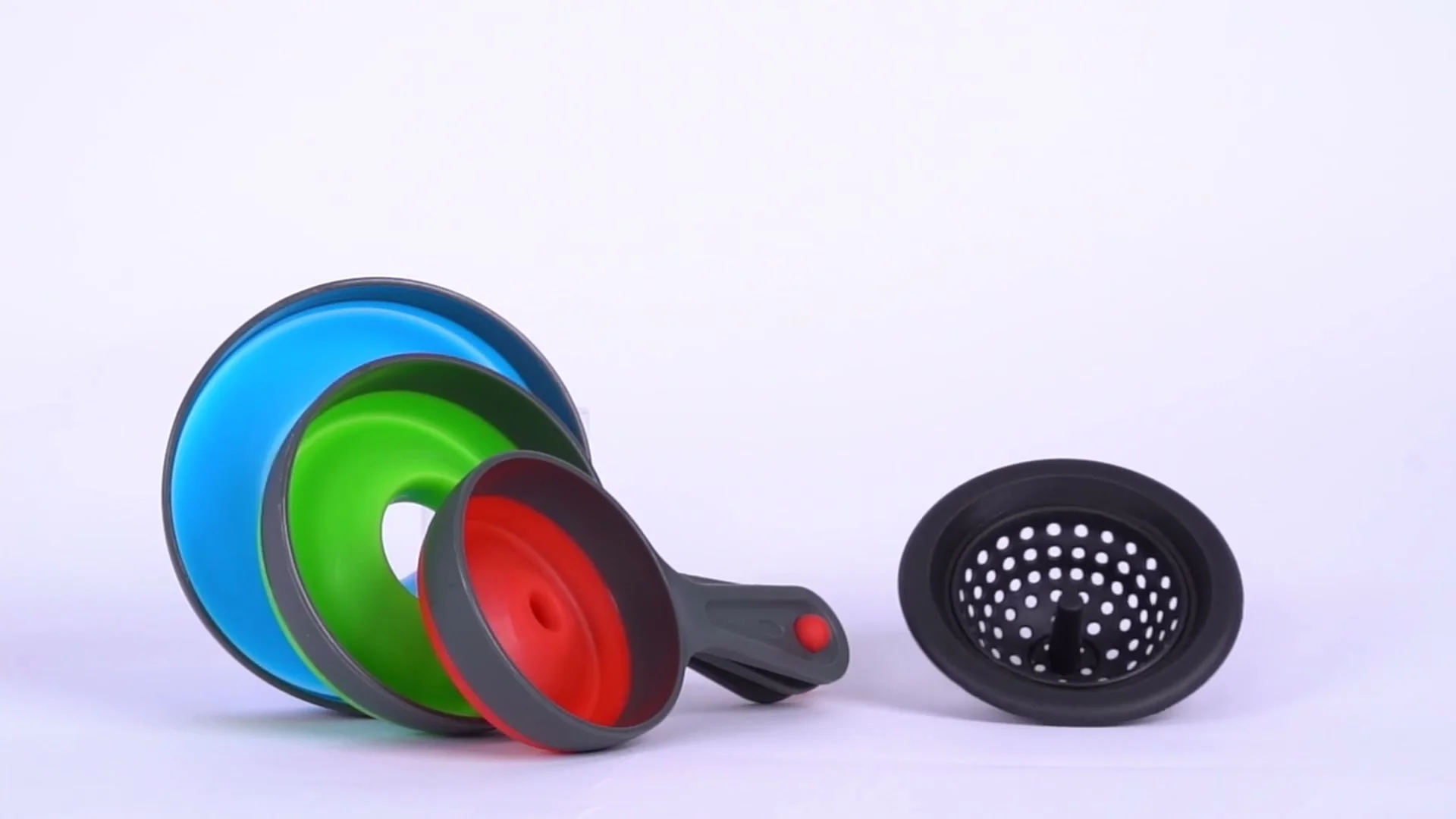
| Silicone set, small (red) | 0.5 in | Bottle necks |
| Plastic set of 6 | 0.23 to 0.55 in | Narrow bottles, spice jars |
When to use the strainer
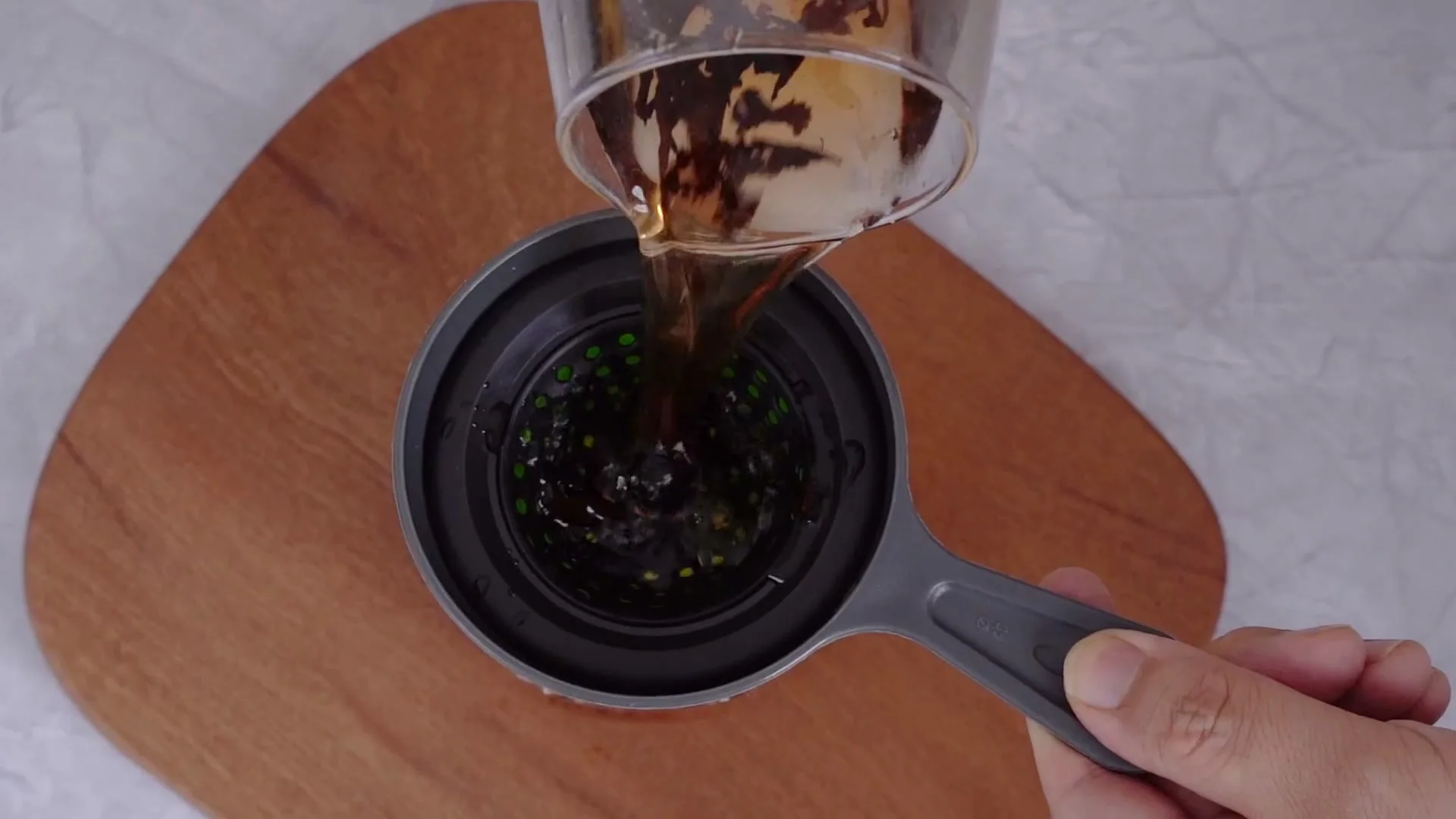
Both of our canning sets come with a strainer that drops into the funnel bowl. It is there for the moments when you want the liquid in the jar and the bits out of it: seeds from a berry syrup, the leaves from a batch of tea, peel and pulp from a juice. Pour slowly so the strainer has time to drain, and lift it out with the funnel when the jar is full.
A strainer is not a jelly bag. Clear jelly recipes usually drip the juice through cloth for a long time, and our strainer is a fast sieve, not a substitute for that step. Use it where speed matters more than perfect clarity, and follow your recipe where it names a cloth or a bag.
If you fill bottles as often as jars, the collapsible silicone set may suit you better. Its three funnels share one strainer, and the small red funnel has a half-inch spout that drops into a bottle neck. It folds flat between canning days.
Wipe, lid, band
With the funnel out of the way, run a damp paper towel around the rim and the first thread of every jar, even the ones that look clean. That wipe is the step Nebraska Extension singles out: an uncleaned rim may cause a seal failure. It takes a few seconds per jar and saves a day of doubt.
Place the flat lid on the clean rim and turn the band until it stops, finger tight. UNH warns against both extremes: a band that is too tight keeps air from escaping and can buckle the lid, while one that is too loose can let liquid out and the seal fail. Follow the lid maker's instructions too, since UNH notes that most current lids no longer need to be heated before use.
- Wipe every rim and the first thread with a damp paper towel.
- Center a new flat lid on the rim.
- Turn the band on until it stops, finger tight, then process as your recipe says.
After the canner
Once the jars come out, leave them alone. Nebraska Extension says not to retighten the bands or press the center of the lids, and to let the jars cool at room temperature for 12 to 24 hours. As they cool, the contents contract and pull the lid down into a firm seal. You may hear the lids pop as it happens.
To check a seal, press the middle of the lid. If it springs back when you let go, it did not seal. A tap with a teaspoon should ring, not thud, and a sealed lid curves slightly down in the center. UNH adds that an unsealed jar can be reprocessed within 24 hours with a new lid, or simply kept in the fridge and eaten soon.
Last, take the bands off, wipe the jars and label each lid with what is inside and the date. Our funnels go in the dishwasher. Nest the small funnel and the strainer inside the large one and they wait in a drawer for next season. If you want to see the rest of our kitchen range, Delove kitchen funnels lists all three sets side by side.
Every product named here is part of the Delove range.